
5 Ways to Improve Your First Touch in 24 Hours
November 18, 2026
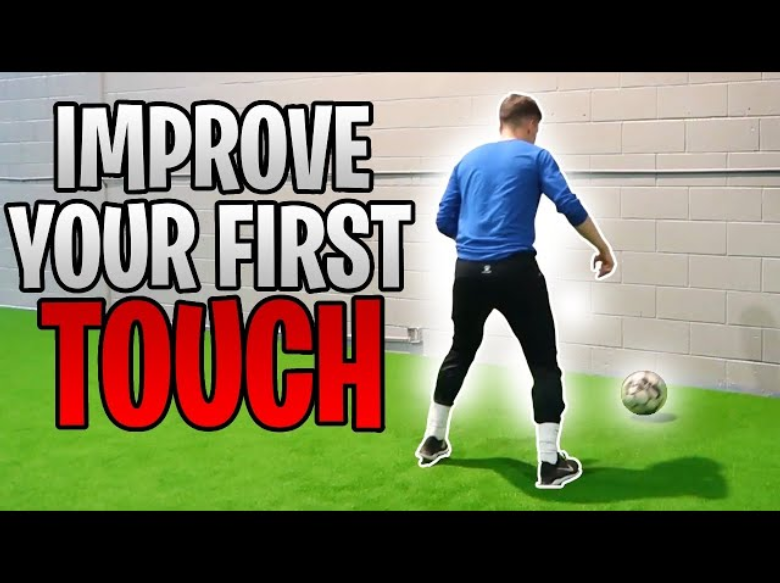
Your first touch isn't going to become world-class overnight. But give us one ball, one wall, and 24 hours — and we can make it better.
Watch any elite midfielder closely and you'll notice something before the spectacular pass, dribble, or shot.
The first touch.
A great first touch buys you time.
A bad first touch takes it away.
The difference can be inches. One touch puts the ball into space and allows you to play forward. Another gets trapped underneath your feet and suddenly a defender is on top of you.
Can you completely transform your technique in 24 hours?
No.
But you can make noticeable improvements in the quality, direction, and consistency of your first touch by training intentionally.
Here are five things you can start doing today.
🧱 1. Hit the Wall — 500 Times
You don't need a private coach, training facility, or expensive equipment.
You need a ball and a wall.
Start about 5–8 yards away.
Pass the ball against the wall and control the return.
But don't mindlessly repeat the same touch.
Work through different surfaces:
- Inside of the foot.
- Outside of the foot.
- Sole.
- Right foot.
- Left foot.
Then vary the passes.
Hit some harder.
Hit some softer.
Move closer.
Move farther away.
Play one-touch.
Play two-touch.
Try controlling across your body.
Try receiving with your back foot.
Your goal isn't simply completing 500 touches.
It's getting your brain and feet accustomed to solving slightly different problems every time the ball comes back.
The wall doesn't give you perfect passes. Neither does a game.
🎯 2. Stop Controlling the Ball — Start Moving It
This is one of the biggest differences between an average first touch and a great one.
Young players often think the objective of the first touch is:
Stop the ball.
It isn't.
The objective is to make your next action easier.
Instead of trapping the ball directly underneath your body, begin intentionally directing it somewhere.
Pass the ball against the wall.
Before it returns, decide:
Left.
Receive toward your left.
Next repetition:
Right.
Take it right.
Then:
Forward.
Take the touch into space.
Now imagine a defender approaching from one side and use your first touch to escape in the opposite direction.
Every first touch should begin answering a question:
Where do I want the ball next?
Once you start thinking this way, receiving becomes part of your movement rather than a separate action.
👀 3. Check Your Shoulder Before Every Touch
Want your first touch to improve without changing anything about your feet?
Start using your eyes.
Before the ball reaches you, check your shoulder.
Look away.
Gather information.
Then receive.
Do this during your wall session even though you already know nobody is behind you.
Pass.
Scan.
Receive.
Pass.
Scan.
Receive.
You're building a habit.
In a match, your first touch is only as good as the information you have before taking it.
If you already know where the defender is, where your teammate is, and where the open space is, your first touch has a purpose.
If you don't look until after receiving the ball, you've already lost time.
Elite players don't just have faster feet.
They see the picture earlier.
🦶 4. Spend 15 Minutes on Your Weak Foot
Everybody wants to use their favorite foot.
That's exactly why you shouldn't.
For 15 minutes, eliminate your dominant foot.
If you're right-footed:
Left foot only.
Receive with it.
Pass with it.
Take the ball across your body with it.
Use the inside.
Use the outside.
Make mistakes.
Your weak foot doesn't necessarily need to become as good as your dominant foot overnight.
It needs to become trustworthy.
Because defenders notice when you refuse to receive on one side.
If every first touch has to get the ball back onto your dominant foot, you've made yourself predictable.
The ability to comfortably receive with either foot instantly gives you more options.
More options create more time.
And time is everything.
⚽ 5. Train the First Touch You're Actually Going to Use
This is the most important one.
👇 Tap your position below.
🏃 Winger
If you're a winger, don't spend your entire session practicing stationary touches directly in front of you.
Practice receiving wide and exploding forward.
Practice receiving down the line.
Practice taking your first touch inside.
Practice controlling a diagonal ball across your body.
🧭 Central Midfielder
If you're a central midfielder, practice receiving on the half-turn.
Check your shoulder.
Open your body.
Receive with the back foot.
Play forward.
🥅 Striker
If you're a striker, practice receiving with a defender imagined behind you.
Protect the ball.
Set it.
Turn.
Receive into shooting space.
🛡️ Center Back
If you're a center back, work on opening your body and taking your first touch away from pressure before playing forward.
Train the touches your position demands.
Technique becomes much more useful when it's connected to the situations you'll actually experience on Saturday.
⏱️ The 24-Hour First Touch Challenge
Want to actually test this?
Give yourself 45 minutes today.
✅ Your 45-minute session:
☐Start with 10 minutes of wall work using both feet.
☐Spend 10 minutes directing your first touch left, right, and forward.
☐Spend 5 minutes adding a shoulder check before every reception.
☐Spend 10 minutes using only your weaker foot.
☐Finish with 10 minutes of position-specific receiving.
Then come back tomorrow and repeat it.
Don't chase perfection.
Look for one thing:
Does the ball feel slightly more predictable at your feet than it did yesterday?
That's progress.
📺 One More Trick: Watch Football Differently Tonight
Tonight, watch 15 minutes of a professional match.
But don't watch the ball.
Pick one player who plays your position.
Watch what happens before they receive it.
👀 Answer these while you watch:
☐Where is their body facing?
☐When do they scan?
☐Which foot do they receive with?
☐Where does their first touch go?
☐How far away from their body do they take it?
☐What happens when they're under pressure?
You'll start noticing something.
The best players often look like they have more time than everyone else.
They don't.
Their first touch creates it.
🧠 Your First Touch Is Your First Decision
A great first touch isn't simply beautiful technique.
It's information + decision + execution.
See the space.
Choose the action.
Move the ball there.
And do it before the defender can react.
You won't become Andrés Iniesta in 24 hours.
But you can become a more intentional player with the ball.
And if you repeat these habits tomorrow?
And the next day?
And for the next month?
Those 500 touches become 5,000.
Then 15,000.
Eventually, something that required concentration starts happening automatically.
That's development.